Kaddish, El Malei Rachamim, and Psalms.
Jewish tradition offers powerful prayers that help families express grief, remember loved ones, and find comfort in community and faith. These prayers are recited during funerals, Shiva services, memorial gatherings, and on the anniversary of a loved one's passing.
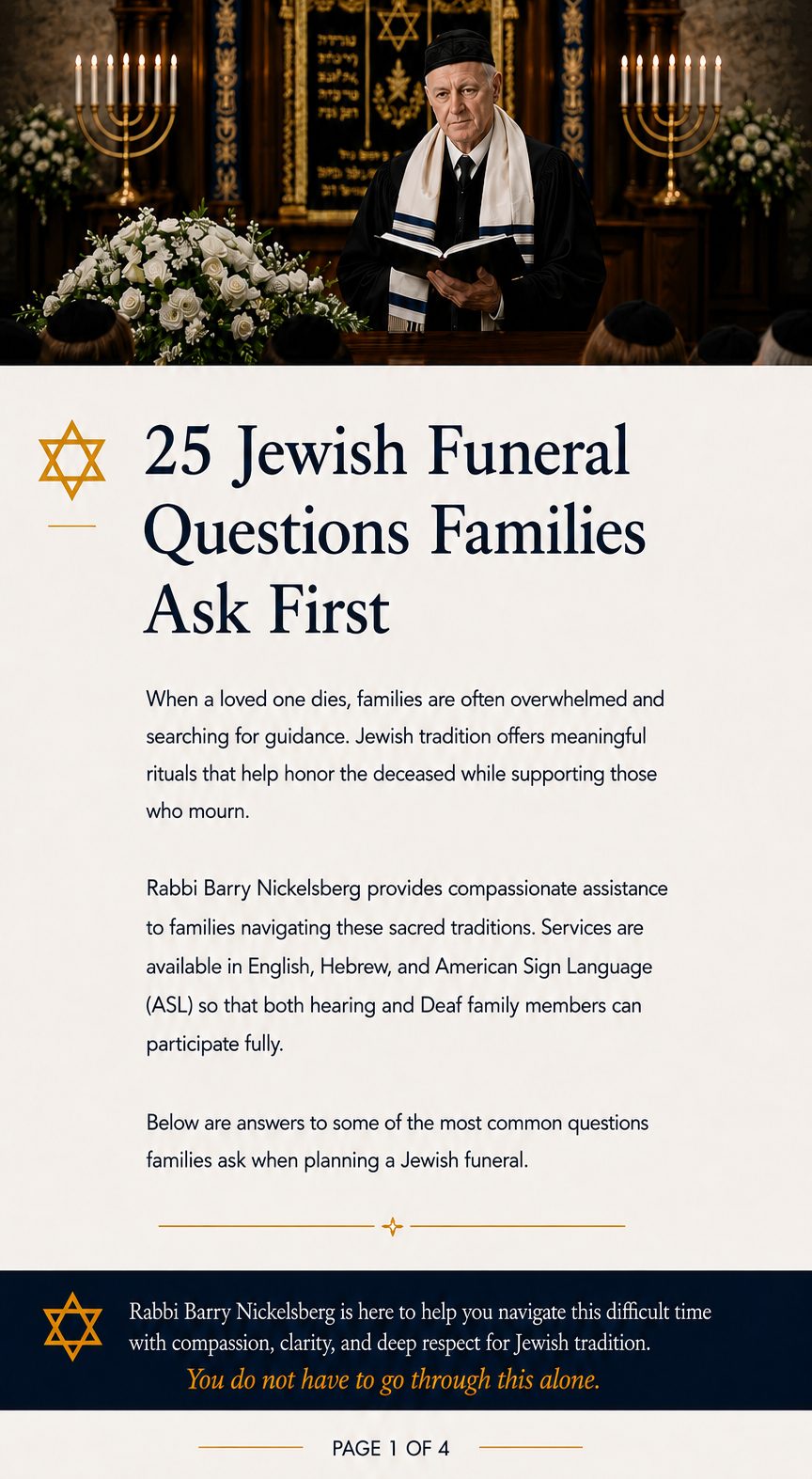
Rabbi Barry Nickelsberg leads funeral and memorial services in English, Hebrew, and American Sign Language (ASL) so that both hearing and Deaf family members can participate fully in honoring the memory of those they love.
The Mourner’s Kaddish is one of the most well-known Jewish prayers associated with mourning. Interestingly, the prayer does not mention death. Instead, it focuses on praising God and affirming life even in moments of grief.
El Malei Rachamim, meaning “God Full of Compassion,” is the traditional memorial prayer asking for peace for the soul of the deceased.
The Book of Psalms has long been a source of comfort during times of grief. Certain Psalms are especially meaningful during funerals, Shiva, and memorial services.
Perhaps the most widely known, Psalm 23 speaks of divine guidance and comfort even in the darkest moments.
After a funeral or during Shiva visits, Jewish tradition offers a traditional expression of comfort to the mourners:
“May God comfort you among the mourners of Zion and Jerusalem.”
This simple but powerful phrase reminds mourners that they are part of a community that shares both grief and hope.
For families that include both Deaf and hearing members, it is essential that everyone can share fully in Jewish mourning rituals. Rabbi Barry Nickelsberg is among the few rabbis who can lead funeral and memorial services simultaneously in spoken English and American Sign Language (ASL).
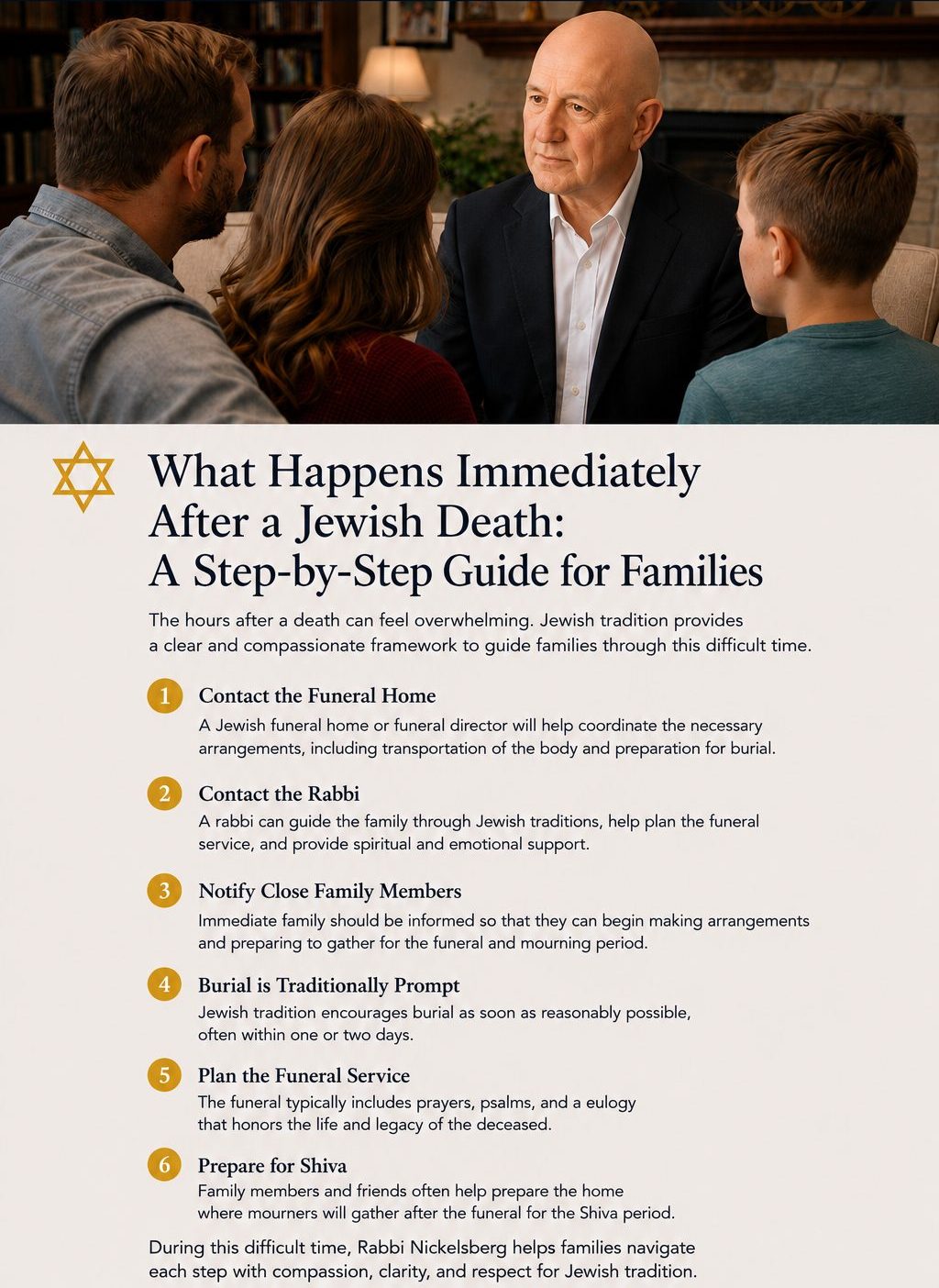
Jewish tradition teaches that memory is preserved through prayer, good deeds, and the stories we share about those we love. Rabbi Nickelsberg provides compassionate leadership during these sacred moments. You do not have to go through this alone.
You are warmly invited to reach out.
Shalom